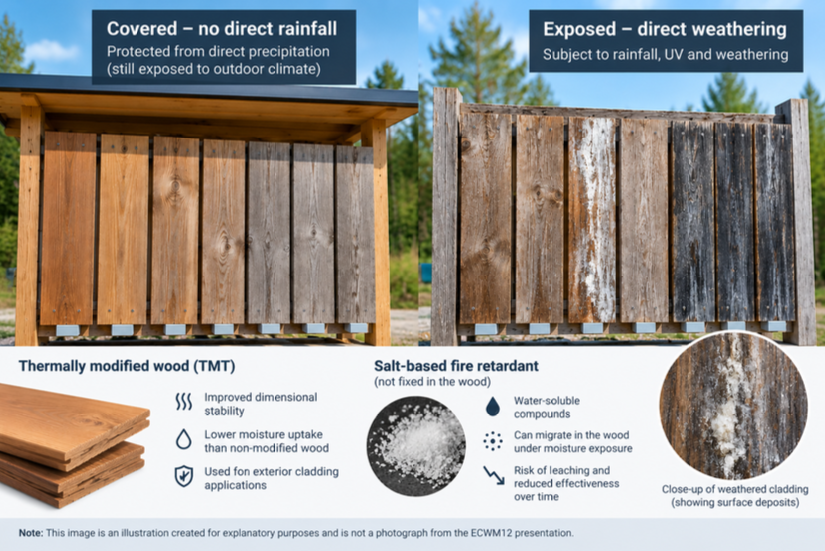
ECWM12 Research Highlights Leaching Risks of Salt-Based Fire Retardants in Thermally Modified Wood
October 30, 2026
Presented at the AWPA 2026 Fall Meeting – Supporting the development of standards for thermally modified wood
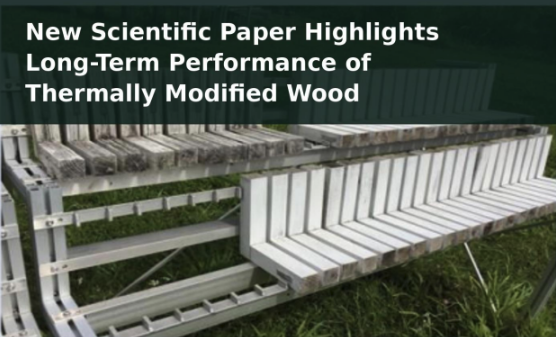
L-joint field exposure testing, Hilo, Hawaii.
A scientific paper by Nina Moldrup of IWT-Moldrup, presented by Nina at the American Wood Protection Association (AWPA) 2026 Fall Meeting, highlights extensive North American research documenting the biological durability and long-term performance of thermally modified wood.
The paper, “Existing North American Laboratory and Long-Term Field Performance Data for Thermally Modified North American Wood Species,” reviews research conducted by the Natural Resources Research Institute (NRRI), University of Minnesota Duluth, in collaboration with Michigan Technological University.
Documented improvements in biological durability
The research evaluated five North American wood species — Eastern Hemlock, Balsam Fir, White Ash, Red Maple and Yellow Poplar — thermally modified using IWT-Moldrup’s Closed Wet Steam (CWS) technology at 170°C and 180°C. Using recognised AWPA laboratory testing methods and several years of outdoor field exposure, the research demonstrated:
- Improved resistance to fungal decay compared with untreated wood.
- Improved long-term outdoor durability, consistent with laboratory findings.
- Reduced equilibrium moisture content (EMC) and improved dimensional stability.
- The potential for EMC measurements to support practical production quality control following initial process qualification.
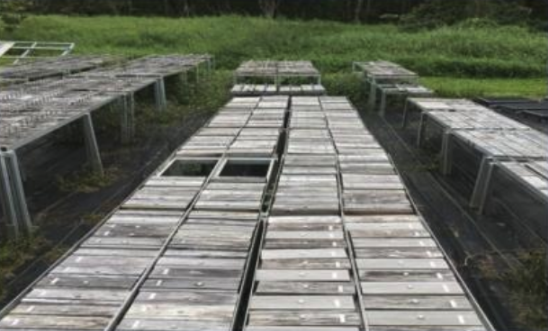
Lap-joint field exposure testing, Hilo, Hawaii.
Supporting future North American standards
The findings are particularly relevant to ongoing discussions within AWPA Working Group P-9, which is examining approaches to evaluating and standardising thermally modified wood.
An important conclusion is that thermal modification performance should be demonstrated through documented laboratory and field testing rather than treatment temperature alone.
The research provides valuable North American evidence supporting the continued development of thermal modification as a non-biocidal wood protection technology for suitable above-ground applications.
Request the scientific paper
The complete scientific paper is available upon request from IWT-Moldrup.
Email: info@moldrup.com