

Performance Evaluation
Using AWPA Methodologies
Research conducted by the Natural Resources Research Institute (NRRI) at the University of Minnesota Duluth evaluated five thermally modified North American wood species using American Wood Protection Association (AWPA) methodologies.
The study examined Eastern Hemlock, Balsam Fir, White Ash, Red Maple and Yellow Poplar, with a focus on moisture resistance, dimensional stability, mechanical properties and biological durability.
Why This Research Matters
Relevant Data for North American Species and Applications
Much of the published research on thermal modification has focused on European wood species and European testing methods.
The NRRI study focused specifically on North American species and evaluated their performance using AWPA methodologies, providing relevant data for North American markets, specifiers and applications.
Research Scope
Five North American species evaluated across four key performance areas
5 Species
Species Evaluated
Eastern Hemlock
Balsam Fir
White Ash
Red Maple
Yellow Poplar
4 Performance Areas
Properties Evaluated
Moisture resistance
Dimensional stability
Mechanical properties
Biological durability
Dimensional Stability
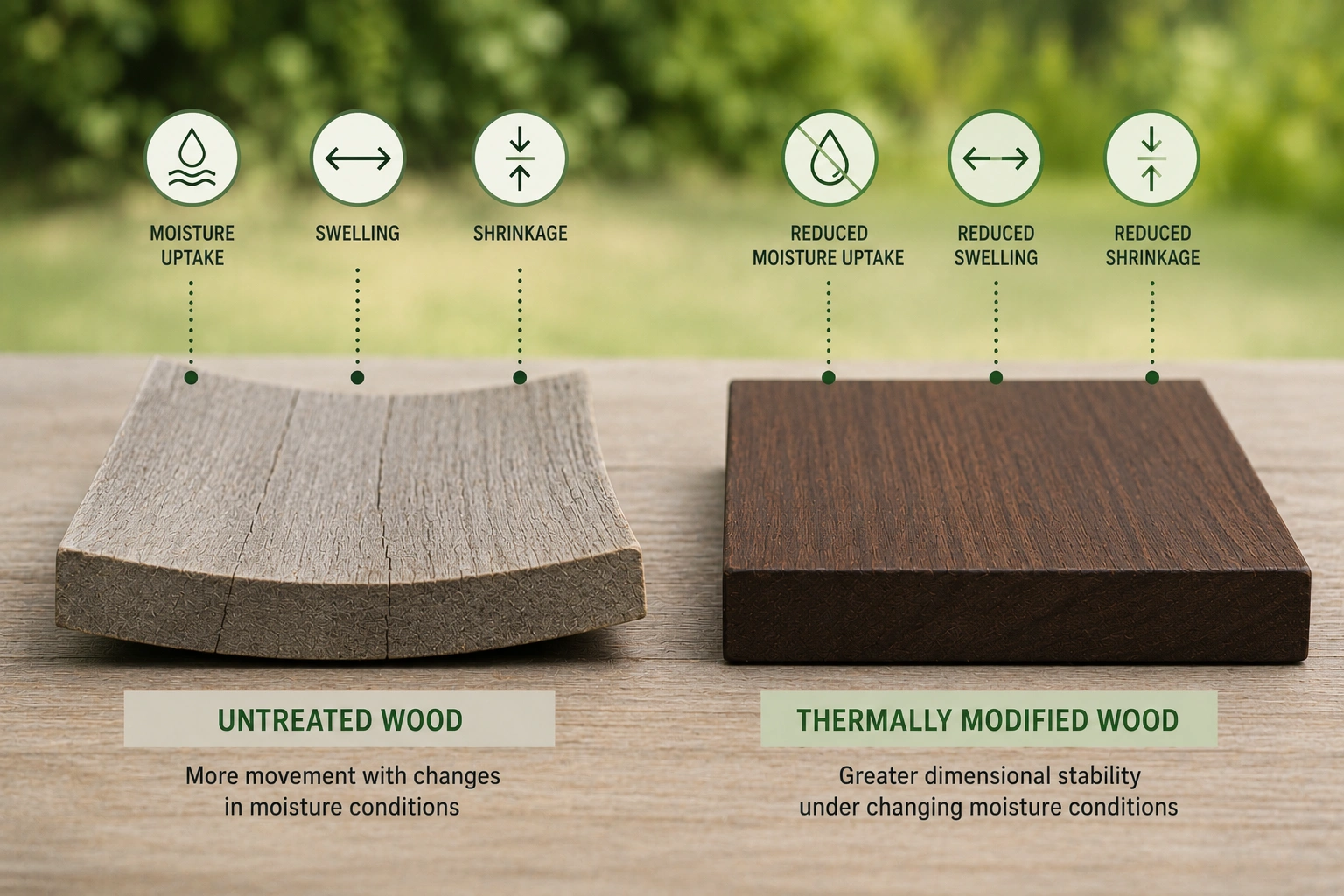
Dimensional stability was one of the key areas evaluated in the NRRI study.
Key Findings
The results documented significant reductions in moisture uptake, swelling and shrinkage across the species tested. Reducing the response of wood to changing moisture conditions can contribute to improved performance and greater stability in demanding applications.
Why It matters
Dimensional movement can contribute to issues such as coating failure, joint opening, warping, distortion and increased maintenance.
Applications
For applications including windows, doors, cladding and exterior millwork, dimensional stability can therefore be an important performance consideration alongside biological durability.




Four Years of Outdoor Exposure in Hawaii
Real-World Performance Under Demanding Conditions
As part of the research, thermally modified North American wood species were subjected to up to 48 months of outdoor exposure testing in Hilo, Hawaii.
Download the NRRI Research Report
Access the full NRRI research report on thermally modified North American wood species evaluated according to AWPA methodologies.
Get Your Copy
Complete the form below to download the full NRRI research report.
We respect your privacy. Your information will only be used to send you the report.